
PROJECT PN II - IDEI No. 307/2011
(PN-II-ID-PCE-2011-3-0544)

Romanian Version
Structure-dynamics-properties relationships and aging effects in nanocomposite elastomers and proton exchange membranes
Results obtained in the year 2011
A new procedure based on Fourier transforms to analyze the DQ curves was implemented. The DQ curve can’t be
used as it is obtained from NMR measurements because the information of residual dipolar couplings distribution is hidden by a wide line which appears at zero frequency. So that, in order that such a DQ curves to be analyzed by Fourier transform, we need a new procedure which uses an exponential correction term with a prefactor that depends on the type of functional groups located in the polymer chains and determination of the best value of the correction relaxation time. For the entire series of EPDM samples
reinforced with 8 types of different fillers, based on carbon black, silane, and CaCO3 precipitate at 20, 40, 60 and 70 phr concentration the DQ Fourier spectra were obtained. Finally, the specific parameter value, distributions and dependency on the topological constraints (filer’s cluster and cross-link density).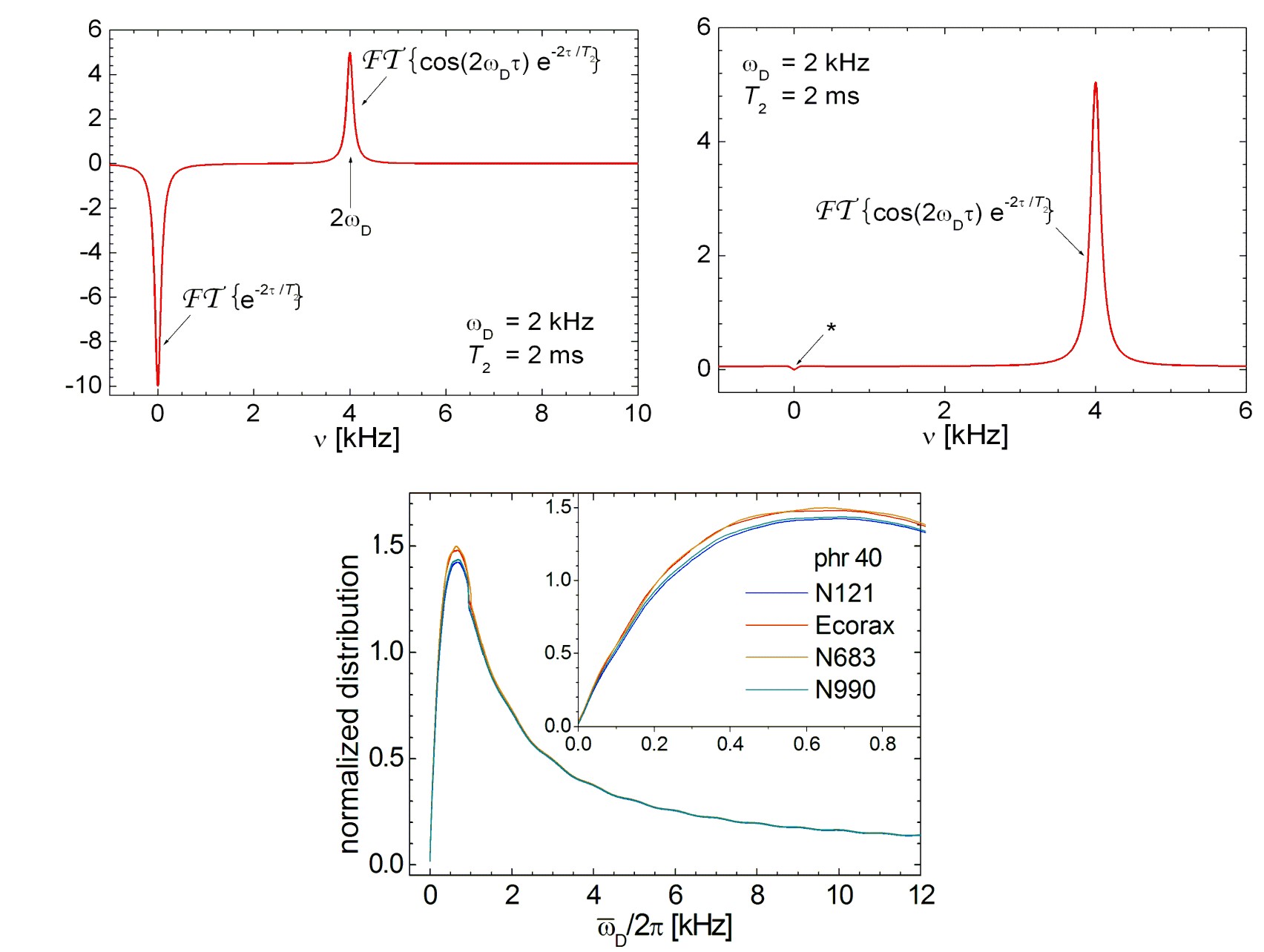
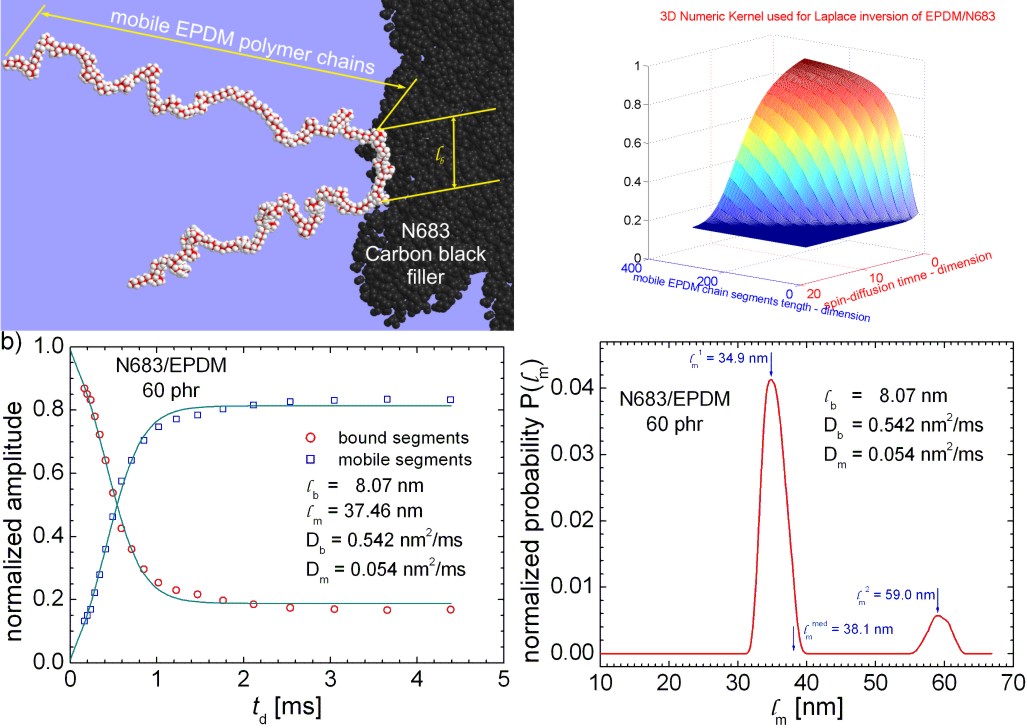
A new Laplace procedure based on theoretical and numerical solutions of one-dimensional spin diffusion equations was implemented. For the first time we wrote a new type of Laplace transform procedure whose kernel is no longer described by a function but is read as a 2D matrix dependent on
the experimental diffusion time value td and domains length l1 of EPDM polymeric chains linked to filler clusters and the mobile EPDM polymer chains l2. The results of algorithm will not be the distributions of relaxation times but will be the distributions of
mobile chain length for different fillers and filler concentrations. The first step was the application of several DQ filters with results observed in Fourier spectra. The evolution of spin diffusion was monitored by observing the time evolution of Fourier (classic) and Laplace (modern) spectra for NMR spin diffusion experiments. The next step was the analysis of spin diffusion curves function of diffusion time and the calculus of spin diffusion coefficients. Finally, the distribution of EPDM polymer
chains domains in the presence of fillers was obtained and the anisotropy of such distribution was estimated.
Results obtained in the year 2012
The absorption degree of several solvents (for ex: toluene (C7H8) with spherical molecule and n-hexane
(C66H14) and octane (C8H18) with linear molecules), in filled EPDM rubber was tested functiof of type (N121, Ecorax® 1720, N683, N990, Ultrasil® 7000 GR, Ultrasil® 7000 GR + Si69, Coupsil® 8113, Precarb® 400) and filler content (20-70 phr).
A new pulse sequence which filters the solvent NMR signal was implemented. This is based on the implementation of a new double quantum dipolar filter in front of the CPMG pulse sequence, moreover the magnetization time had such a value that an additionally partial T1 filter was also used.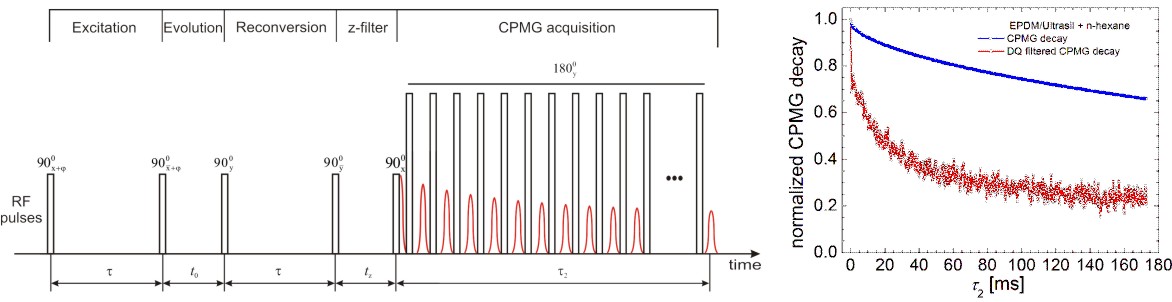
The 1D T2 distributions were measured for various solvents absorbed in filled EPDM rubber. For example for n-hexane absorbed in Ultrasil+ Si69 si Coupsil
the distributions show four peaks which can be associated ultra-mobile polymer chains or with the solvent molecules which explores the pores and chanales of between the EPDM polymeric chains connected to filler clusters. This interpretation was correlated with the analysis of 2D T1–T2 and T2–T2 correlation maps of absorbed solvents in filled EPDM rubber. The dynamics of solvent molecules located in the filled EPDM polymeric network pores and canals was evidenced from the measurement of the distribution of self-diffusion D.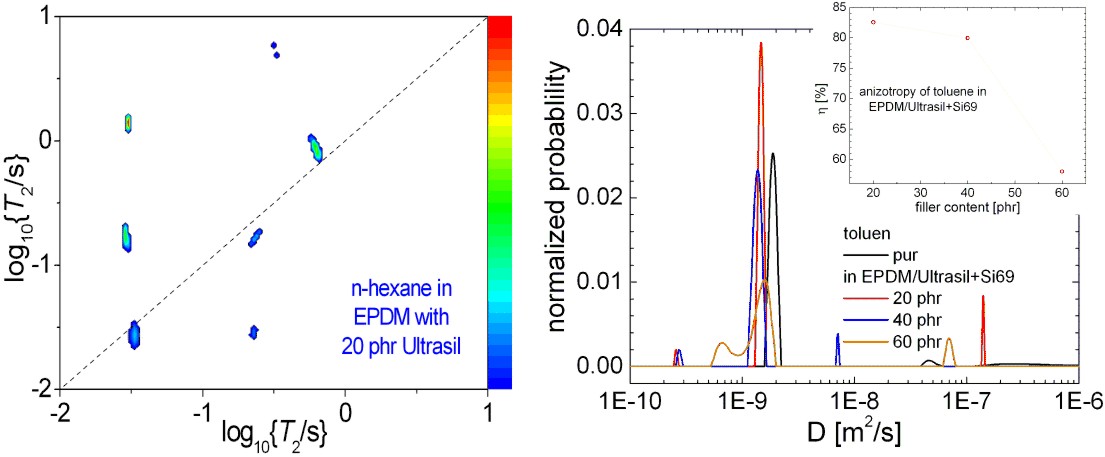
The residual dipolar coupling curves are obtained function of cross-link density of natural rubber samples natural aged over six years by the use of Laplace transform of DQ NMR build-up curves. Moreover, such DQ NMR build-up curves vor arfiticial aged NR samples subjected to exposure at various temperatures, and finally the efects of ageing were compares
for natural and artificial ageing.
Specific NMR, FTIR, DSC and AFM techniques were developed for the study of changes at elastomers surface subjected to thermal, UV, chemical and mechanical accelerated aging. In this sense the T2 relaxation time distributions were obtained
for a series of nano-composite non-aged elastomers, measured at the rubber surface The study of ageing factors on the rubber was performed by recording the FT-IR with ATR (attenuated total reflection) spectra, of DSC curves and AFM images. Moreover, the penetration depth of the effects of extreme temperatures obtained by exposing an rubber sample closed to a hot suource (500 oC), was determined from the measurement of the T2 relaxation times distributions at a rubber surface.
Results obtained in the year 2013
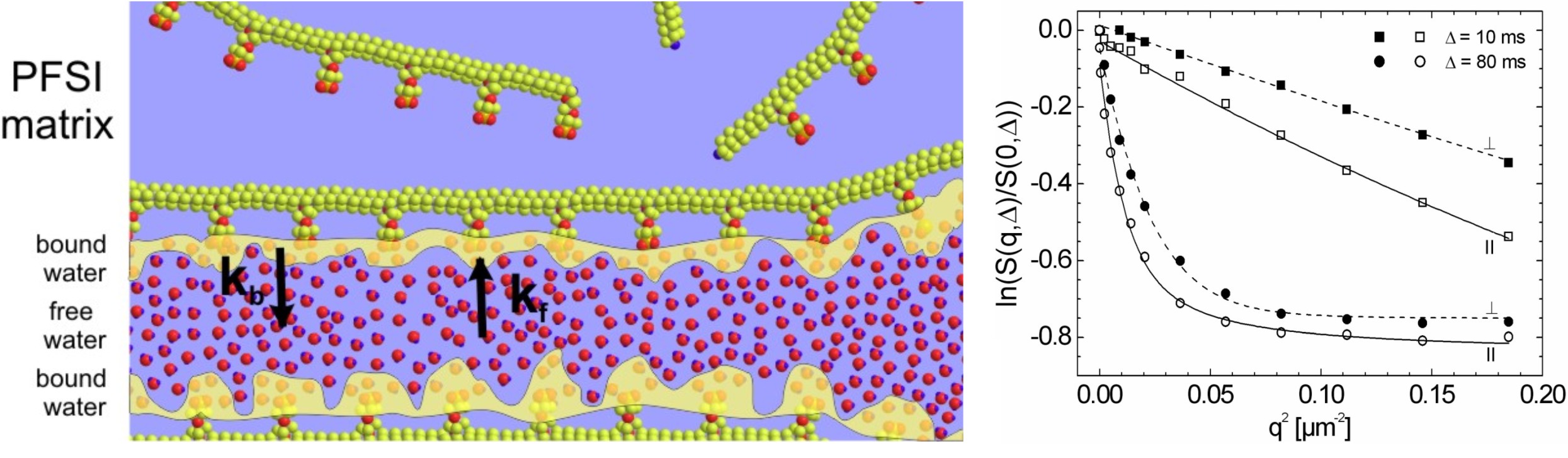
The stimulated echoe decay curves corresponding to free and bond water were measured by PGSSE method for hydrated PFSA membraned function of the SiO2 content. A theoretic tool
was developed to support the numeric fitting algorithm to describe the
PGSSE decay curves in the presence of diffusion, relaxation and free to bound water exchange. The application of these procedure on the measured data lead to the calculus of 1H self-diffusion coefficient, longitudinal relaxation rates R1, and exchange rated k for PEM membraned function of SiO2 content.
A MONTE-CALRO numeric program was writen in C++ for the simulation of 2D exchange maps of water from pores and chanals of various formes and dimensions in the presence of free to bound water exchange. So far, this MONTE-CALRO numeric program was tested as a new tool for the simulaton of 2D T2–T2 exchange maps in ideal conditions.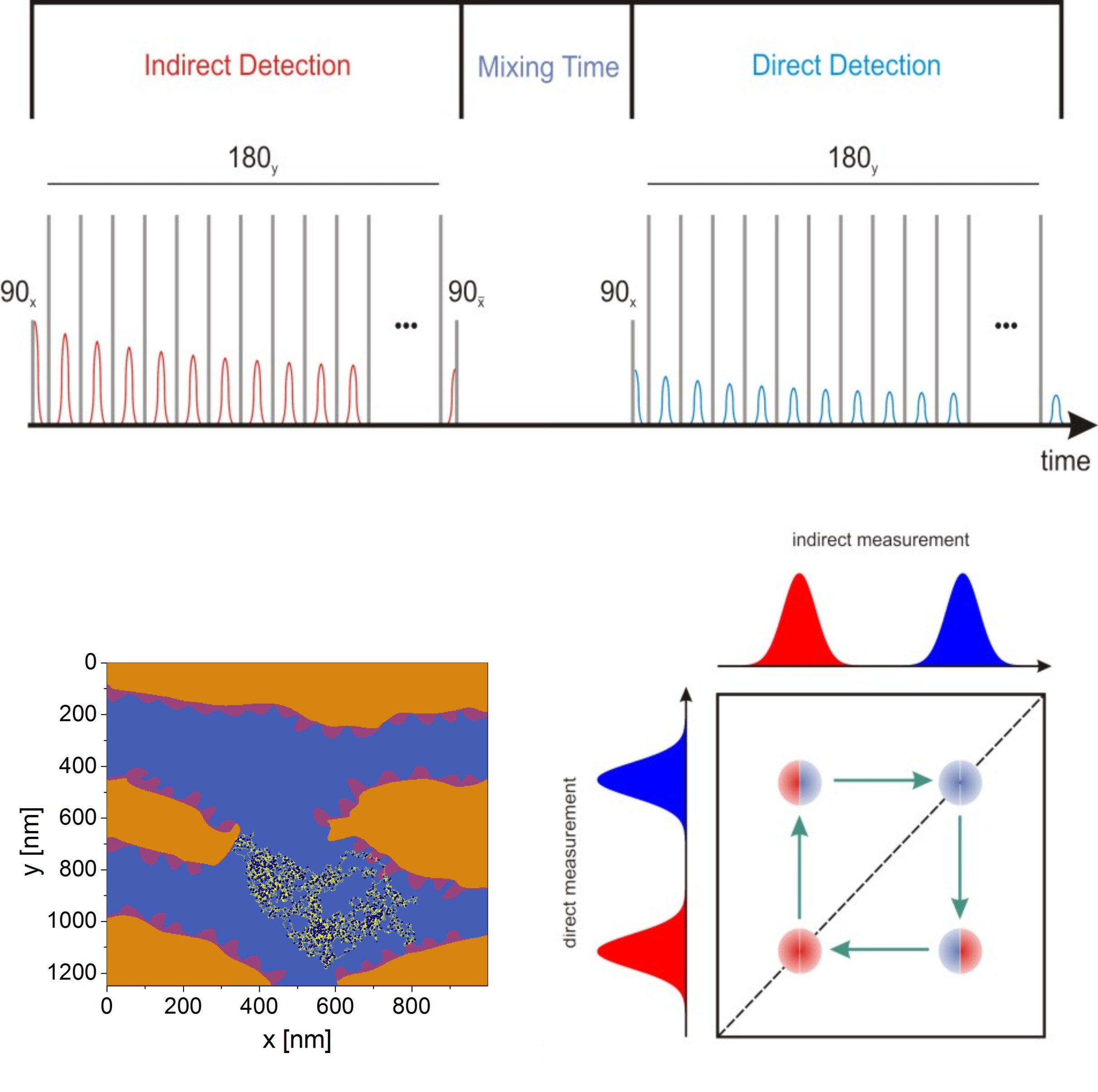
Results obtained in the year 2014
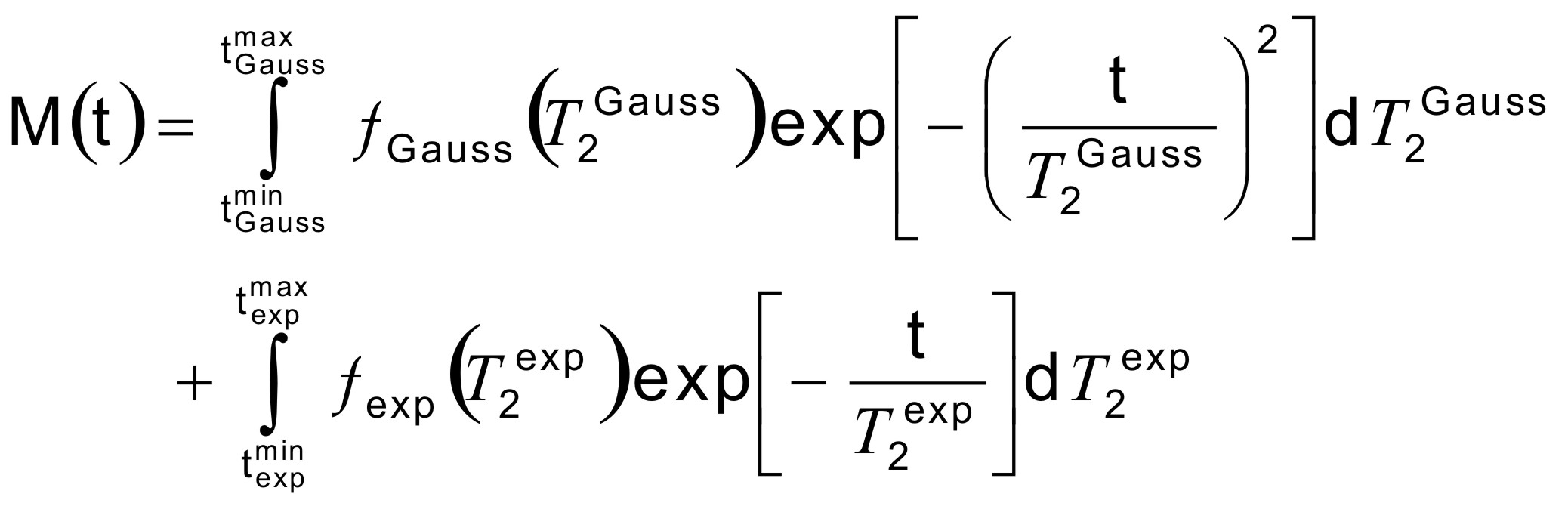
It was observd a not-exponential character of relaxation curves for membranele PFSA/SiO2 membranes. This fact leads to the developement of a new Lapalce transform model which
contain a complex kernel constituted as a summ of multi-Gaussian + multi Exponential components:
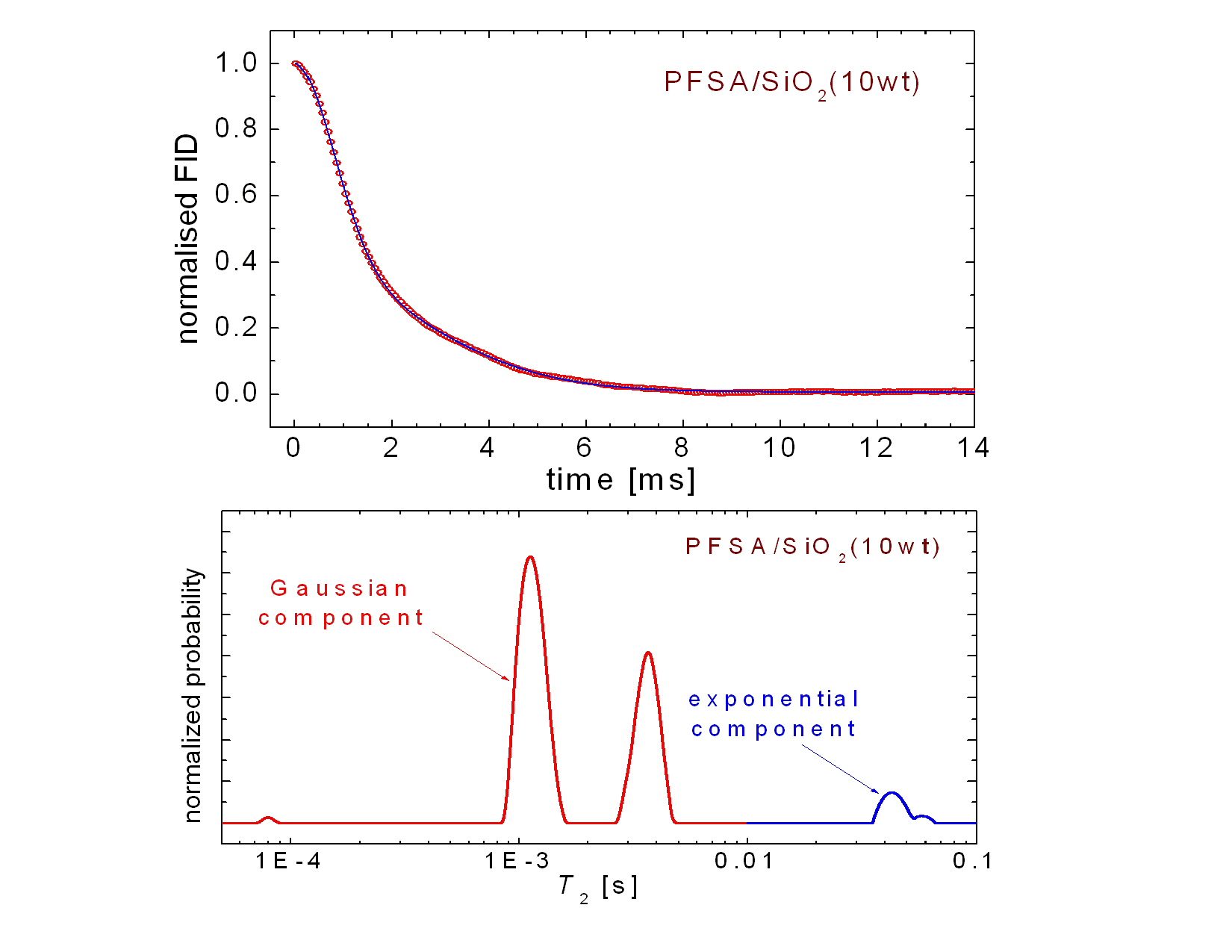
The below figure presnt i) the FID cureve registred fot a PFSA membrane with 10wt SiO2 is presented toghether with the approximation of experimental data performed with the new Laplace inversion algorithm and ii) the distribution of transverse relaxation times coresponding to the Gaussian and exponential components.
New NMR pulse sequences, specific to 2D T2–T2 si T1–T1 correlation maps were writen. These were analized usign the new Lapalce inversion algorithms based on the complex kernels of multi-Gaussian and multi-exponential types.
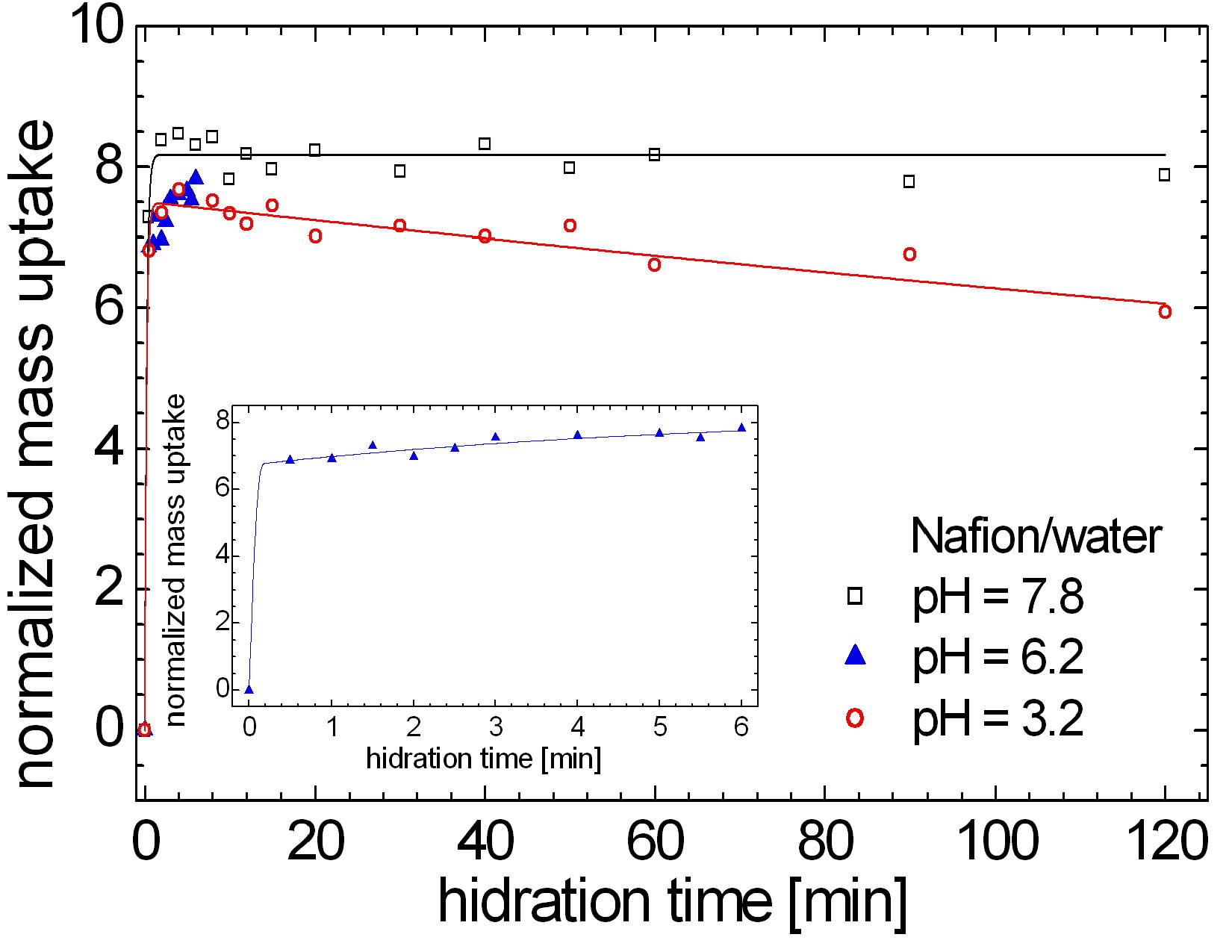
The absorption of various solvents with different pH in PEMs membranes was measured. We obtain small variation of absorption curves with the change of the solvent pH but we observed two apsorption times, fom which one being very fast (under 1 minute) and which lead to a fas hidration of membrante with ~ 80 % from the total
absorbed mass.
Results obtained in the year 2015
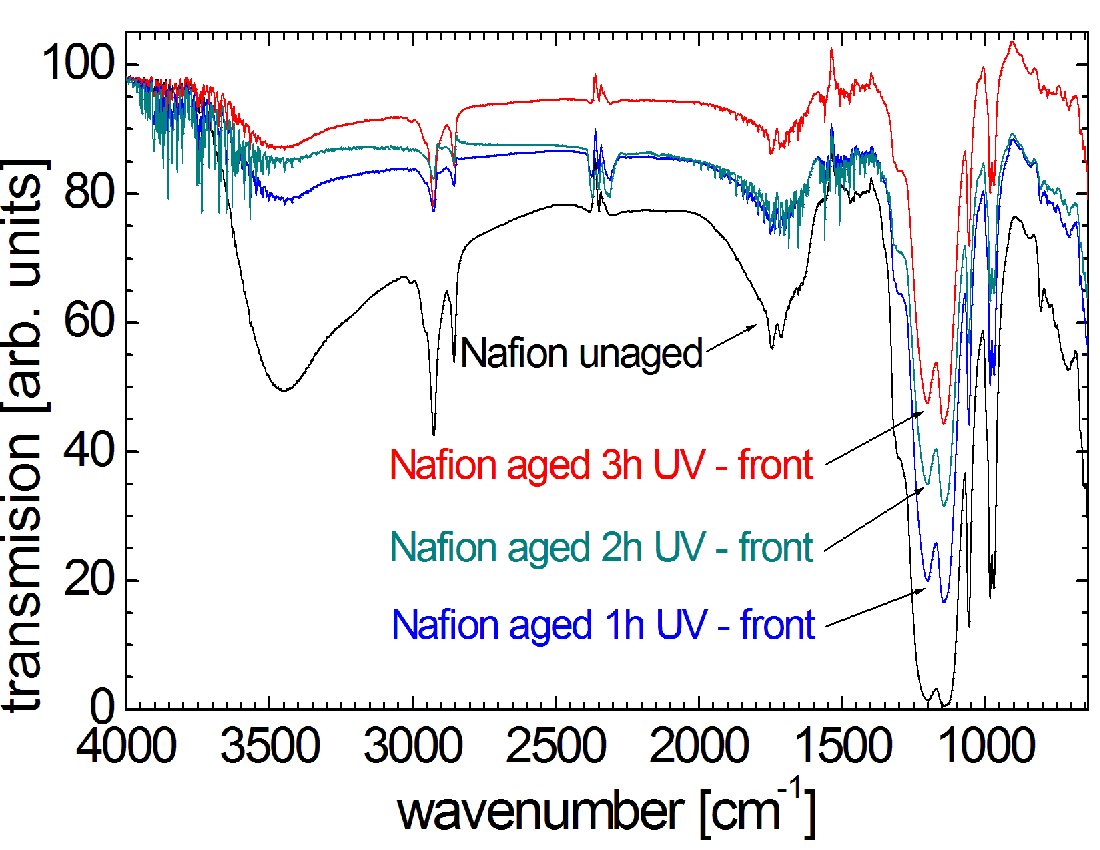
An UV lamp with wavelength λ = 253.7 nm located on top of the probe at a distance of 10 cm was used to study the structural modification effects of PEMs membranes after UV radiation expose over 1, 2 and 3 hours. For these membranes and for an additional non-irradiated
Nafion membrane the transmission IR spectra were measured using the ATR accessory of FT-IR spectrometer. The spectra are presented in the below figure. Here we can observed a clear effect of irradiation associate with destruction of i) functional groups (CFCF2; CF2CF2, OCF2CFO; CF2; CF3;
SO3-H+) (high wavelengths number) and ii) polymer backbone ([(CFCF2)m-(CF2CF2)]n)
that leads to the increase of transmittance (small wavelengths number).
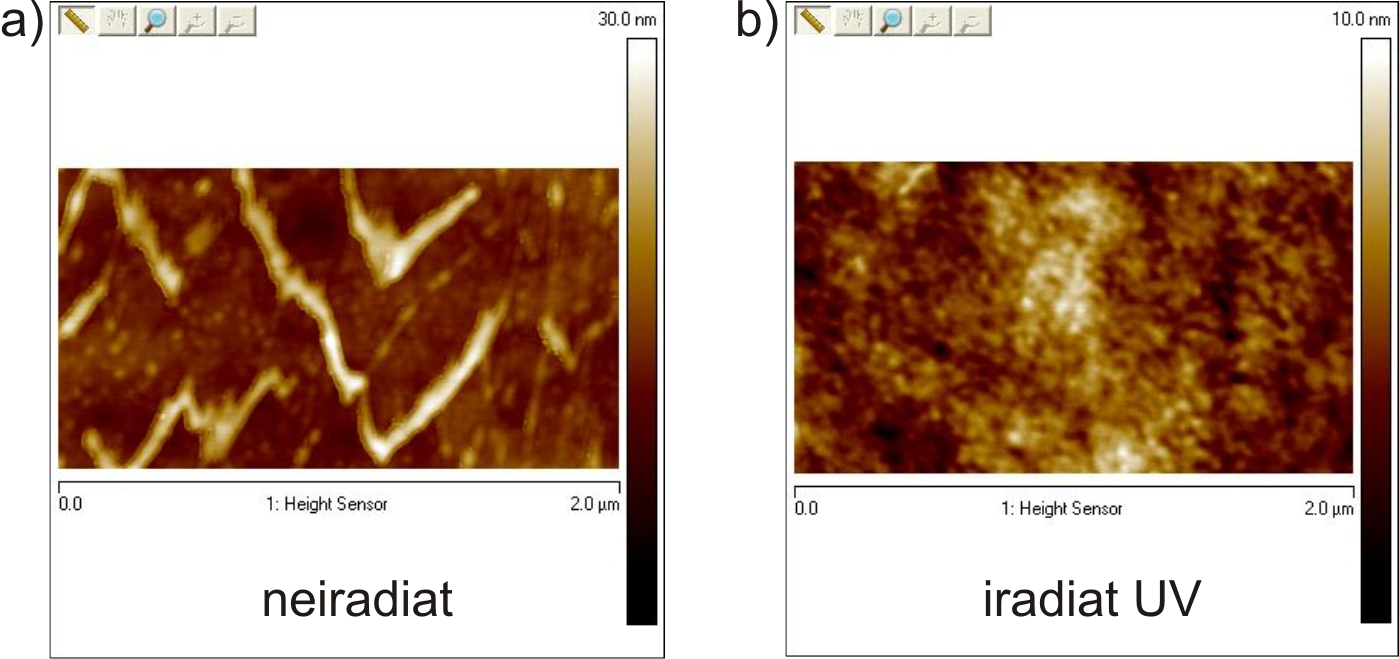
The UV irradiation effect on the PEM membranes, in particular on the Nafion 117, it can be well observed from AFM measurement (atomic force microscopy) before irradiation (below figure - left) and after irradiation (below figure - right). The AFM images obtained for the non-irradiated sample (left) show the cannels network (the dark color representing a small value) allowing the proton conduction of membrane and the polymeric network (the light color representing the high value). This well-defined cannels network disappears after UV irradiation (right) via a dramatically destruction of polymer network.
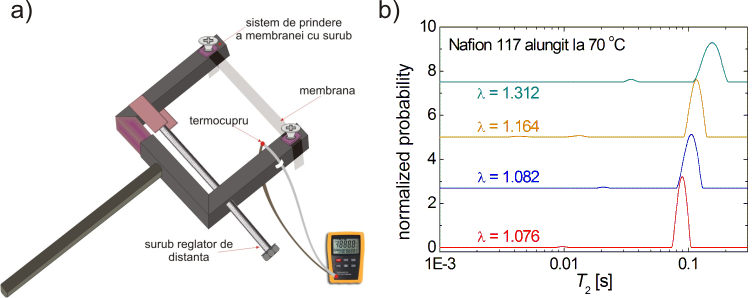
To study the temperature effects on the mechanically deformed PEM membranes a stretching mechanism was made. This mechanism is provided with an extendable arm and to which was attached a thermocouple for temperature measurement, like in the below figure. The distributions of T2 relaxation times presented below (Fig. 8) were measured for four values of stretching ratio (the length of deformed membrane reported at the initial length). The effect of deformation of PEM membranes is clearly observed especially on most mobile components characterized by the peak localized at high value of T2, which is shifted toward higher values of T2, indicating an increase of mobility under the action of mechanical deformation most probability by the stretching of molecular chains.
Results obtained in the year 2016
The main interaction of PEMs membranes due to their functioning regime in electric combustion cells is with water. One may question if there is another environment, probably also aqueous, which is more efficient to be used to produce electrical energy. In this sense the interaction PEM membranes
– solvent should not lead to degradation of the membrane with effects on proton conduction thereof. A candidate for this type of solvents is H2O2, the hydrogen peroxide. Unfortunately the distilled water was proved to be a strong aging agent for
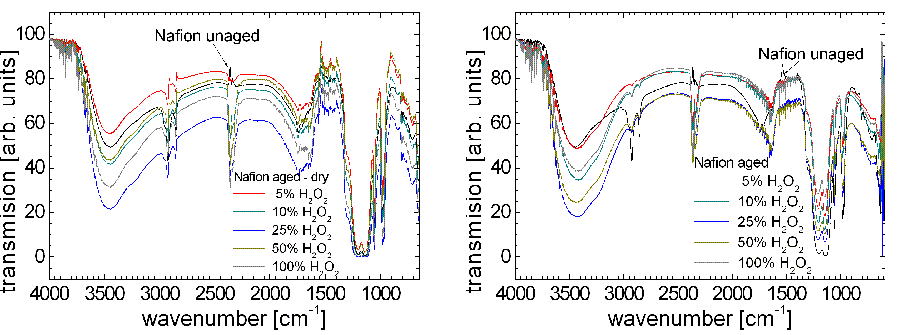
PEMs membranes. In the below figure the FT-IR spectra measured using the ATR accessory (attenuated total reflation) at membranes’ surface of initial dry Nafion (left) and initial hydrated (right) in function of hydrogen peroxide content (0-100%) are presented. The hydrogen peroxide acting like an aging agent has a global effect of ATR-FT-IR spectra contrary to the effect of UV radiation (Fig. 42) meaning that with the increase of the H2O2 concentration, the transmittances decreases.
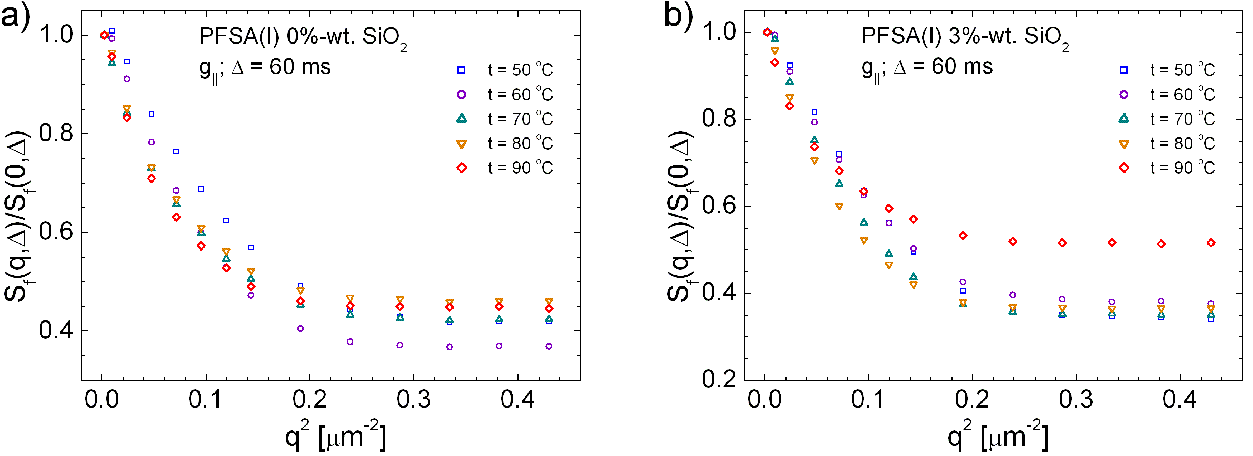
To estimating the temperature effect on the self-diffusion process, a series of NMR PGSSE type measurements were performed for PFSA/SiO2 hydrated at temperatures between the intervals from 50 ºC until 90 ºC. Parts of these curves were presented below for 0 and 3 –wt. concentrations of SiO2 in PESA (PFSI).
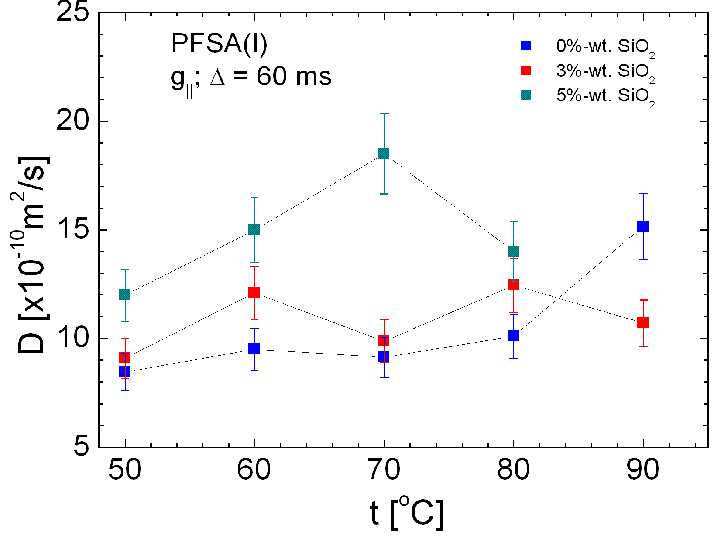
In order to analyze the PGSSE curves, a dedicated fitting program was written C++ in which the theoretical model developed in 2013 at the O5 objective (more specific the equations 10-12) were implemented. As fitting variables we had: i) the self-diffusion coefficient D whose dependence of temperature are presented below and of which values are observed to increase with the increases of the SiO2 content ii) exchange rates kf from free water (f) → bound water (b) and kb from bound water (b) →free water (f) and iii) relaxation rates R1,f corresponding to free water (f) and R1,b corresponding to bound water (b).
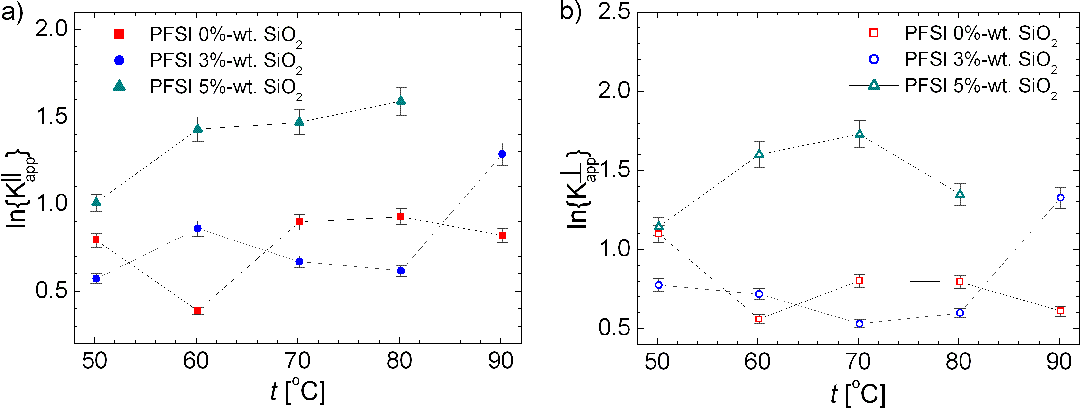
Anomaly diffusion is related to weak restrictions of water diffusion due to the structural and dynamics characteristics of the polymeric matrix of the PEM membranes leading to a non-Gaussian propagator (see the below figure).
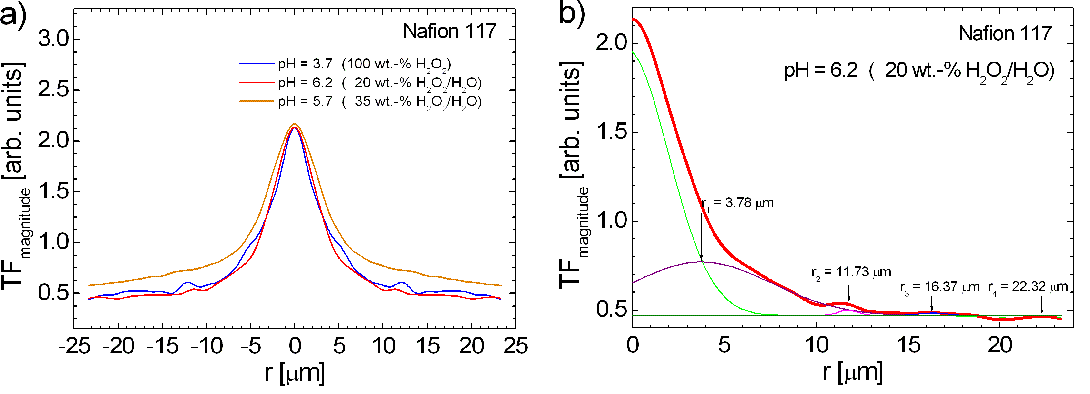
The quantitative characterization of the propagator can be make used a parameter named kurtosis.

where E(q,D) is the amplitude of the simulated echo P(X,D) is the averaged propagator or the density probability function which describes the probability that a molecule from any starting position will moved to a X distance in the diffusion time D. In order to introduce the apparent kurtosis parameter kapp (vide infra) for molecules which diffuses into a specific direction given by the magnetic field gradient, we consider the developing in power series of the natural logarithm of normalized values of the stimulate echo:

Project Manager:
Prof. Dr. Radu FECHETE
Physics and Chemistry Department
Faculty of Materials and Environmental Engineering
Technical University of Cluj-Napoca
Str. B-dul Muncii, No. 103-105
Cluj-Napoca, Romania